By Pages & Potions
Published: August 2026
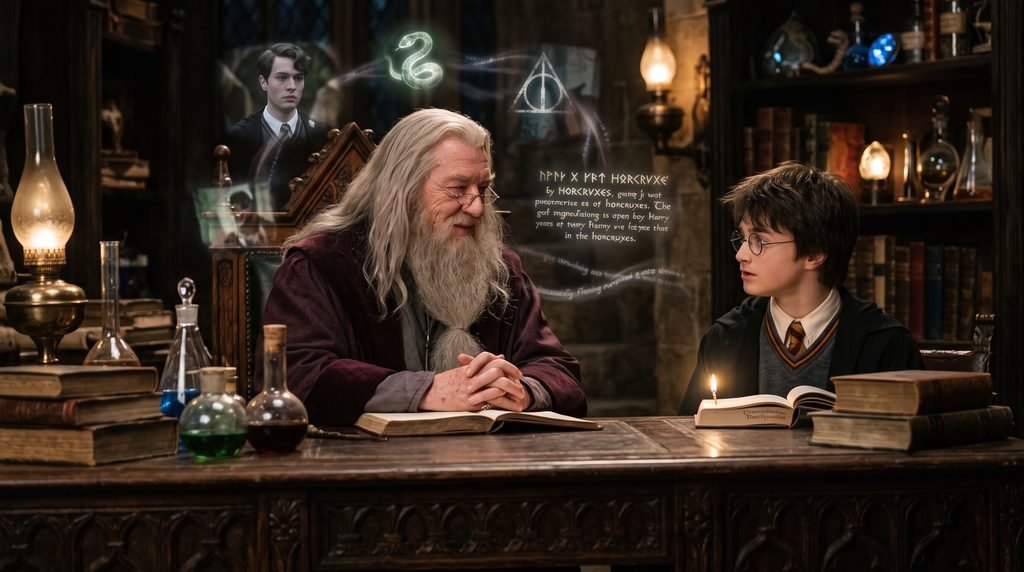
There is something special about returning to Harry Potter after you’ve finished the books.
The first time through the story, you’re usually too busy wondering what happens next. Who can be trusted? What is hidden at Hogwarts? Will Harry survive? Which mystery will finally be solved?
But once you know the ending, earlier moments suddenly look very different.
A sentence that seemed insignificant becomes important. A character’s strange behaviour starts making sense. A tiny detail turns into a clue. And sometimes, something that appeared to be a simple piece of world-building turns out to have been quietly preparing you for something much bigger.
That’s part of what makes the Harry Potter books so rewarding to revisit.
Here are 20 Harry Potter details that make much more sense once you’ve finished the books.
1. Snape’s Behaviour Towards Harry Was More Complicated Than It Seemed
Throughout the story, Snape’s attitude towards Harry can seem almost impossible to understand.
He is harsh, sarcastic, and frequently unfair towards him.
But after discovering the truth about Snape’s history with Lily, his behaviour takes on a completely different meaning.
Snape doesn’t simply dislike Harry.
Harry constantly reminds him of James Potter while also carrying Lily’s eyes, a painful combination that keeps Snape connected to memories he desperately wants to bury.
His feelings towards Harry are complicated by love, resentment, guilt, and the promise he made to protect Lily’s son.
Knowing the ending makes many of their earlier interactions considerably more tragic.
2. Dumbledore Knew Much More Than He Told Harry
One of the most interesting things about rereading the books is realizing just how much Dumbledore understood.
He often asks Harry questions instead of giving him direct answers.
At first, this can make him seem mysterious or even frustrating.
But later, it becomes clear that Dumbledore is deliberately preparing Harry for information he believes Harry needs to discover for himself.
His approach is far from perfect, but many of his conversations with Harry have a second meaning once you know where the story is going.
3. The Prophecy Wasn’t What It First Appeared to Be
The prophecy surrounding Harry and Voldemort seems straightforward at first.
There is a child capable of defeating Voldemort.
But the prophecy becomes much more interesting once we understand that Voldemort himself helped determine which child it referred to.
By choosing Harry as his enemy, Voldemort effectively helped create the circumstances described by the prophecy.
That makes the relationship between the two characters even more complicated.
The prophecy didn’t simply predict their conflict.
Their actions helped create it.
4. Harry’s Scar Was More Than a Symbol
Harry’s scar is introduced almost like a permanent reminder of the night his parents died.
But throughout the books, it becomes much more significant.
The pain in Harry’s scar is repeatedly connected with Voldemort’s emotions and presence.
What originally looks like a simple physical mark becomes one of the earliest indications that Harry and Voldemort are connected in ways neither of them fully understands.
Knowing what happens later makes those early moments much more important.
5. The Sorting Hat Knew Harry Could Belong in Slytherin
Harry’s fear of being sorted into Slytherin seems like a simple childhood worry.
But the Sorting Hat’s hesitation becomes much more interesting after the rest of the story is revealed.
Harry possesses several qualities traditionally associated with Slytherin, including ambition, determination, resourcefulness, and a willingness to act independently.
He also has a connection to Voldemort through the piece of Voldemort’s soul inside him.
The fact that Harry ultimately chooses Gryffindor is therefore more meaningful than it first appears.
The Sorting Hat wasn’t necessarily wrong.
Harry’s choice mattered.
6. Neville Was Always More Important Than He Realized
Neville begins the story as a nervous, forgetful student who struggles to believe in himself.
But his journey becomes one of the most satisfying character arcs in the entire series.
By the end, Neville demonstrates extraordinary courage.
Knowing his ending makes his early insecurity more emotional because we can see just how much potential was hidden beneath it.
His story is ultimately a reminder that bravery isn’t the absence of fear.
Sometimes it is simply deciding to act despite being afraid.
7. The Mirror of Erised Explains Something Important About Harry
When Harry looks into the Mirror of Erised, he sees his family.
Ron sees himself as successful and admired.
The mirror doesn’t show people what they need.
It shows them their deepest desires.
Harry’s reaction therefore tells us something fundamental about him: more than fame, power, or recognition, what he truly wants is a family and a sense of belonging.
That makes the mirror one of the earliest windows into Harry’s character.
8. Sirius’ Animagus Form Was Symbolically Perfect
Sirius Black can transform into a large black dog.
At first, this is simply a magical ability that helps him move around undetected.
But the symbolism becomes much more interesting.
Sirius is repeatedly associated with dogs, loyalty, protection, and his own nickname, Padfoot.
His Animagus form also makes the connection between Sirius and Harry’s family feel even stronger.
Knowing his history makes the choice of form feel much less random.
9. Lupin’s Condition Explains His Personality
Professor Lupin is one of the calmest and most compassionate adults Harry meets.
But his life is shaped by being a werewolf.
His condition affects his employment, relationships, confidence, and sense of belonging.
Knowing this makes his behaviour throughout the series more meaningful.
Lupin understands what it feels like to be feared because of something you cannot completely control.
That is one reason he becomes such a patient and understanding teacher for Harry.
10. The Marauders Were Much More Connected Than Harry Initially Realized
James Potter, Sirius Black, Remus Lupin, and Peter Pettigrew weren’t simply four school friends.
They became Animagi specifically to support Lupin during his transformations.
That detail completely changes how we understand their friendship.
It also makes Peter’s betrayal considerably more painful.
The person who once belonged to this extraordinarily close group ultimately became the person who betrayed Harry’s parents.
The history of the Marauders is therefore not just a fun piece of Hogwarts lore.
It is an important part of the tragedy surrounding Harry’s childhood.

11. Fred and George Were More Than Comic Relief
Fred and George are often remembered for their jokes, inventions, and chaotic sense of humour.
But their role in the story becomes more meaningful when you consider how much courage they show.
They leave Hogwarts on their own terms, create a successful business, and openly challenge authority.
Their humour is not simply there to make the reader laugh.
It is also one of the ways the books explore resistance, independence, and refusing to accept rules simply because someone powerful created them.
12. The Weasleys Were Harry’s First Real Family
Harry spends much of his childhood believing that he doesn’t belong anywhere.
Then he meets the Weasleys.
They invite him into their home, include him in their family life, argue with him, celebrate with him, and treat him like one of their own.
This makes Harry’s relationship with the family particularly important.
The Weasleys give him something the Dursleys never did: a place where he belongs.
13. Hermione Was Often the One Keeping Everyone Alive
Harry and Ron are brave.
But Hermione’s preparation frequently makes their adventures possible.
She researches spells, remembers important information, thinks through problems, and carries books everywhere.
On a first read, this can simply make her seem like the smartest member of the trio.
On a reread, however, you begin to notice just how often Hermione’s knowledge saves them from serious consequences.
Without her, Harry and Ron probably wouldn’t have survived nearly as many adventures.
14. The Importance of the Deathly Hallows Was Hidden in Plain Sight
The Deathly Hallows are introduced relatively late in the story, but their symbols and concepts feel almost like they belong to the world from the beginning.
The Elder Wand, Resurrection Stone, and Invisibility Cloak each represent a different relationship with death.
Harry ultimately becomes the character who possesses all three.
But unlike Voldemort, Harry doesn’t seek immortality.
His willingness to accept death is precisely what separates him from his greatest enemy.
15. The Invisibility Cloak Wasn’t Just Another Magical Object
Harry receives an Invisibility Cloak during his first Christmas at Hogwarts.
At first, it seems like an incredibly useful magical tool for sneaking around the castle.
Later, we discover that it is one of the three legendary Deathly Hallows.
That revelation makes Harry’s first adventures with the cloak much more significant.
He had been carrying one of the most important magical objects in history without knowing it.
16. Dobby’s Actions Were Always Driven by His Loyalty
Dobby can initially seem unpredictable.
He causes problems, interferes with Harry’s plans, and sometimes makes situations dramatically worse.
But his motivations become clearer as the story progresses.
Dobby’s loyalty to Harry is genuine, even when his attempts to help are chaotic.
His development from an abused house-elf to someone who actively chooses his own actions is one of the quieter but more meaningful arcs in the books.
17. Harry’s Relationship With Death Changes Throughout the Story
Harry begins the series as a child who has already lost his parents, although he doesn’t fully understand that loss.
As the story continues, he experiences more deaths and gradually develops a very different relationship with mortality.
By the final book, Harry understands that he may have to die.
And instead of running from that possibility, he chooses to face it.
That decision is central to the conclusion of the entire series.
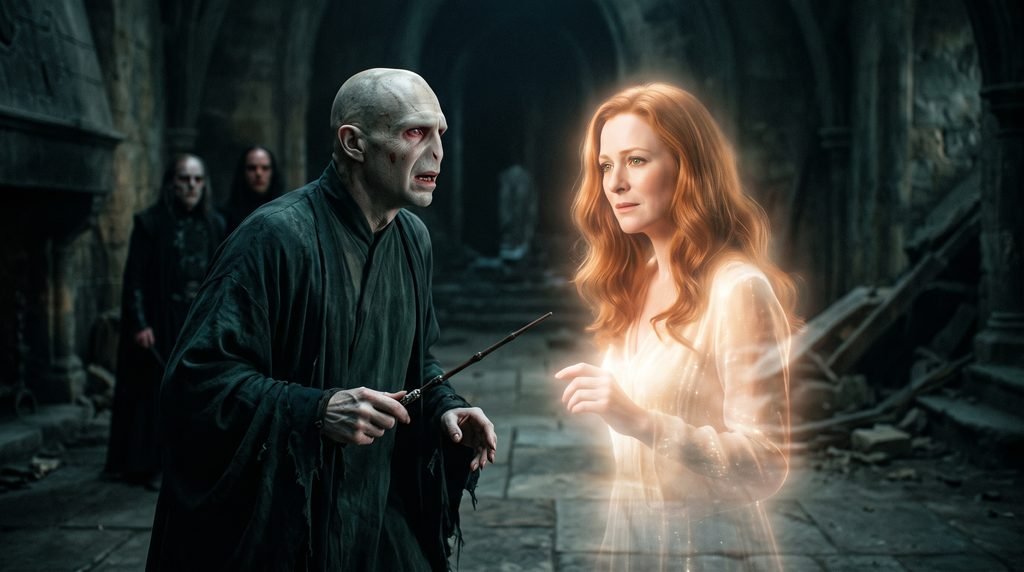
18. Voldemort Never Understood Love
Voldemort spends much of his life believing that power is the only thing that matters.
He understands fear. He understands control. He understands ambition. But he never truly understands love. That is why Lily’s sacrifice is so important.
Harry survives because Lily chooses to protect him, and that protection becomes one of the most powerful forces in the entire story.
Voldemort repeatedly underestimates love because he sees it as weakness.
The story ultimately proves him completely wrong.
19. Harry Was Never Defined by the Prophecy Alone
One of the most important ideas in Harry Potter is the relationship between destiny and choice.
Harry is connected to Voldemort through the prophecy.
But throughout the story, Harry repeatedly chooses what kind of person he wants to become.
He chooses friendship. He chooses loyalty. He chooses compassion. And eventually, he chooses sacrifice.
The prophecy may have shaped his circumstances, but it didn’t determine every decision he made.
That distinction is one of the reasons Harry’s story feels so personal.
20. The Ending Was Being Prepared From the Beginning
Perhaps the most rewarding thing about rereading Harry Potter is realizing how much of the ending was quietly prepared much earlier.
Objects that seemed insignificant become important.
Characters who appeared suspicious turn out to be loyal.
Small conversations acquire new meanings.
And moments that seemed like ordinary pieces of a magical adventure become clues to the larger story.
That’s why the books reward rereading so well.
The first time, you’re discovering the story.
The second time, you’re discovering the story underneath the story.
Why Harry Potter Rewards a Second Read
Harry Potter is one of those stories that changes depending on when you read it.
As a child, Hogwarts might feel like the ultimate fantasy — a magical school hidden somewhere in the mountains, waiting for you to receive your letter.
As you get older, other things begin to stand out.
The complicated adults. The sacrifices. The friendships. The consequences of choices. The characters who were struggling long before Harry ever met them. And perhaps that is why the books continue to attract readers years after their original publication. There is always another detail hiding between the pages.
So the next time you return to Harry Potter, don’t just follow the plot.
Look closer.
You might be surprised by how much was there all along.
If you enjoyed this article, you can discover more magical stories and curiosities on the Pages & Potions Blog.
For official information about the Harry Potter universe, visit the official Harry Potter website.